Handy discrimination sensor - List of Manufacturers, Suppliers, Companies and Products | IPROS

Handy discrimination sensor Product List

1~11 item / All 11 items

Displayed results

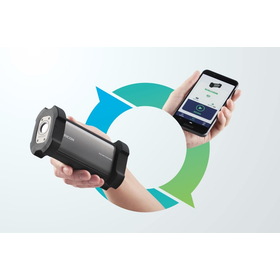
In-house implementation of incoming inspection of plastic materials using a resin identification handheld sensor.

Contributes to cost reduction and shorter lead times! Easy operation for anyone, anywhere.

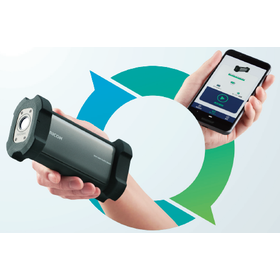
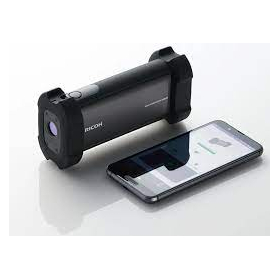
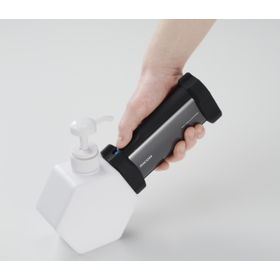
The "Resin Identification Handy Sensor" is a product that allows for speedy identification of various incoming materials, with results available in just 2 seconds. It features a lightweight and compact design that can be handled with one hand. Simply take it to the field, place the resin you want to identify against the measurement area, and press the measurement button. We have independently developed an optical engine that has achieved miniaturization and significant cost reduction. 【Features】 ■ Standard registration of 13 commonly used resin data types ■ Ability to add up to 100 custom data types ■ Capable of determining mixed resins and calculating their ratios ■ Ability to save images of measured resins ■ Data can be exported to a computer *For more details, please refer to the PDF document or feel free to contact us.

Added to bookmarks

Bookmarks list

Bookmark has been removed

Bookmarks list

You can't add any more bookmarks

By registering as a member, you can increase the number of bookmarks you can save and organize them with labels.

Free membership registration

[Case Study] Sensor Reduces Sorting Time by Half! Higashi Nihon Recycling Systems

Reducing sorting work time by half with the use of a resin identification handheld sensor! Also contributes to reducing work load.

We would like to introduce a case study on the introduction of the "RICOH Resin Identification Handheld Sensor B150" at East Japan Recycling Systems Co., Ltd. The company previously used identification equipment that weighed around 2 kg, which was very heavy and posed a significant workload for workers who had to identify 300 to 350 items per day. After the introduction of the new sensor, the compact and lightweight design improved work efficiency, reducing the working time by about half. Additionally, the types of resins identified are now displayed, eliminating the need for screen switching and shortening measurement time. 【Previous Challenges】 - The weight of the conventional identification equipment was heavy, placing a large burden on workers. - The size of the conventional identification equipment was large, requiring careful selection of a placement area when temporarily setting it down during work. - When the type of resin could not be identified, workers had to switch screens to check the most likely materials, leading to concerns about identification accuracy. *For more details, please refer to the PDF document or feel free to contact us.*

  • 1-2.PNG
  • others
  • Handy discrimination sensor

Added to bookmarks

Bookmarks list

Bookmark has been removed

Bookmarks list

You can't add any more bookmarks

By registering as a member, you can increase the number of bookmarks you can save and organize them with labels.

Free membership registration

[Resin Identification Handy Sensor Column] Tips for Measurement: Black Resin Edition

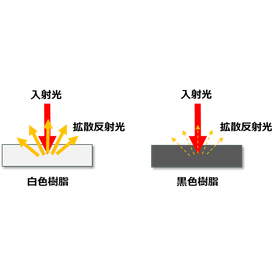
The principle of discrimination is a spectral method using near-infrared light! A column introducing tips for measuring black resin.

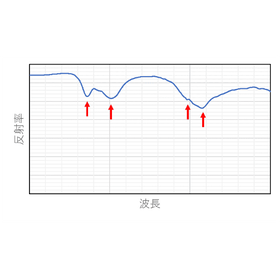
The identification principle is a spectroscopic method using near-infrared light. The measurement involves irradiating the resin with near-infrared light and acquiring the spectrum of the diffuse reflected light. The acquired spectrum is transferred to a smartphone, where it is processed by an app, and the resin is identified by comparing the correlation coefficients with the registered resin data. Identification is completed in about 2 seconds, and the results are displayed on the app screen as well as outputted audibly. *For detailed content of the column, please refer to the related links. For more information, feel free to contact us.*

  • 【樹脂判別ハンディセンサーコラム】測定のコツ 黒樹脂編2.png
  • 【樹脂判別ハンディセンサーコラム】測定のコツ 黒樹脂編3.png
  • 【樹脂判別ハンディセンサーコラム】測定のコツ 黒樹脂編4.png
  • others
  • Handy discrimination sensor

Added to bookmarks

Bookmarks list

Bookmark has been removed

Bookmarks list

You can't add any more bookmarks

By registering as a member, you can increase the number of bookmarks you can save and organize them with labels.

Free membership registration

RICOH HANDY PLASTIC SENSOR B150

Even if you are operating for the first time, you can easily identify the resin! With various functions and settings, the sorting process is highly efficient.

The "RICOH HANDY PLASTIC SENSOR B150" is a handheld resin identification sensor that allows for the speedy and easy differentiation of various types of plastics. It achieves a lightweight and compact size that can be handled with one hand. Since resin identification can be performed on-site, it contributes to an efficient workflow by eliminating the need to take samples back. Once the power is turned on, simply place the resin you want to identify against the measurement area and press the measurement button. We have pursued a simple operability so that many people can easily use it. 【Features】 ■ Compact and always portable ■ Simple operability that is easy for beginners and experts alike ■ Wireless connection with smartphones ■ Application that informs results via voice and screen ■ Selection of identification model data to improve resin identification efficiency *For more details, please refer to the PDF document or feel free to contact us.

  • Other resource recycling
  • Collection and transportation
  • Handy discrimination sensor

Added to bookmarks

Bookmarks list

Bookmark has been removed

Bookmarks list

You can't add any more bookmarks

By registering as a member, you can increase the number of bookmarks you can save and organize them with labels.

Free membership registration

With a resin identification handheld sensor, recycle waste plastic without throwing it away!

Proper sorting of waste can also appeal as an environmental initiative!

We would like to introduce the utilization proposal for our "Resin Identification Handy Sensor." This is effective for addressing the issue of collectively disposing of plastic waste and offcuts generated in our own factory's production process. By sorting the materials that should be discarded, we can achieve cost savings of millions. Please feel free to contact us when needed. 【Overview】 ■ Issue: Collectively disposing of waste and offcuts generated in our own factory ■ Solution: Sorting materials to be discarded, achieving cost savings of millions *For more details, please refer to the PDF document or feel free to contact us.

  • others
  • Handy discrimination sensor

Added to bookmarks

Bookmarks list

Bookmark has been removed

Bookmarks list

You can't add any more bookmarks

By registering as a member, you can increase the number of bookmarks you can save and organize them with labels.

Free membership registration

[Case Study] Visualizing the Value of Waste Plastics! LIXIL

We will introduce a case where efforts towards valuable transactions and waste reduction have rapidly accelerated!

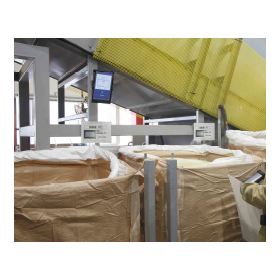
We would like to introduce a case where the "Ricoh Resin Identification Handheld Sensor B150" was implemented at LIXIL Corporation, which handles a wide range of building materials, equipment, and various housing-related services. The company is promoting activities aimed at recycling and monetizing waste plastics at its Nabari factory, which is responsible for the production of entrance doors and interior building materials. However, a significant challenge was that most of the materials were unknown, making it impossible to sort them, and they had to be disposed of as mixed plastics. With the introduction of the sensor, it became possible to identify the types of plastics, and it was found that out of the 200 tons of waste plastics that were previously discarded each year, 50 tons had high potential for profitable resale. This has also contributed to a change in the recycling awareness of the manufacturing staff. 【Previous Challenges (Partial)】 - Some waste plastics with clear materials, such as PS and PP, could be recycled, but most were disposed of as mixed plastics due to unknown materials. - It was difficult to promote sorting within the process because the material and weight could not be visualized, leading to slow progress in primary sorting. *For more details, please download the PDF or feel free to contact us.*

  • Other resource recycling
  • Other analytical equipment
  • Environmental Survey
  • Handy discrimination sensor

Added to bookmarks

Bookmarks list

Bookmark has been removed

Bookmarks list

You can't add any more bookmarks

By registering as a member, you can increase the number of bookmarks you can save and organize them with labels.

Free membership registration

[Usage Example] Acceptance/Shipping Inspection of Recycled Pellets

Recycled pellets can be easily categorized, which is expected to improve productivity!

We would like to introduce a case study on the use of the "resin identification handheld sensor" in the acceptance/shipping inspection of recycled pellets. There are cases where variations in the PP and PE ratios occur during the crushing and molding processes of recycled pellets. When the purity of the target material decreases, it ultimately affects the quality of the finished product. Therefore, inspections are conducted during the shipping and acceptance of recycled pellets to classify them by grade. By using pellets with consistent purity of PP and PE, the quality of recycled material products is stabilized. [Case Overview] ■ Target Companies: Pellet manufacturers, waste plastic recycling manufacturers ■ Challenges: Inconsistent purity of PP and PE affecting the quality of recycled material products ■ Effects: Identification by grade and provision of products with consistent quality *For more details, please refer to the PDF document or feel free to contact us.

  • others
  • Handy discrimination sensor

Added to bookmarks

Bookmarks list

Bookmark has been removed

Bookmarks list

You can't add any more bookmarks

By registering as a member, you can increase the number of bookmarks you can save and organize them with labels.

Free membership registration

[Use Case] Quality Inspection of Incoming Goods from Domestic and International Sources

If you can easily perform quality checks in-house, you can prevent issues such as foreign matter contamination!

We would like to introduce a case study on the use of the "Resin Discrimination Handy Sensor" in quality inspection of incoming goods from both domestic and international sources. When accepting recycled products or parts manufactured overseas, there is a lack of know-how in quality inspection, leading to the use of external organizations. This sometimes results in the need for on-site visits to domestic and international factories for sampling inspections. Even toy parts, which have strict standards, can be easily inspected, ensuring product quality and preventing unnecessary costs. 【Case Overview】 ■ Target Companies: Plastic product manufacturers, electronics manufacturers, toy manufacturers, cosmetics manufacturers ■ Challenges: Quality inspections are outsourced, requiring on-site visits for sampling inspections ■ Benefits: In-house quality inspections, reducing outsourcing and travel costs *For more details, please refer to the PDF document or feel free to contact us.

  • others
  • Handy discrimination sensor

Added to bookmarks

Bookmarks list

Bookmark has been removed

Bookmarks list

You can't add any more bookmarks

By registering as a member, you can increase the number of bookmarks you can save and organize them with labels.

Free membership registration

Simplification of resin material analysis for competitor product analysis.

If we can analyze competitor products in a short cycle, it will expand business opportunities and new ventures!

We would like to introduce the application of our "Resin Identification Handy Sensor." In-house and simplified analysis of competitor products. Reducing analysis costs and man-hours, enabling speedy analysis of resin materials. It allows for easy inspection and prevents unnecessary costs from arising. Please feel free to contact us when you need assistance. 【Overview】 ■Issue: Analyzing resin materials using FT-IR and DSC incurs high costs and man-hours. ■Solution - Speedy analysis of resin materials. - Easy inspection of competitor products, preventing unnecessary costs. *For more details, please refer to the PDF document or feel free to contact us.

  • Other analytical equipment
  • Non-destructive testing
  • Handy discrimination sensor

Added to bookmarks

Bookmarks list

Bookmark has been removed

Bookmarks list

You can't add any more bookmarks

By registering as a member, you can increase the number of bookmarks you can save and organize them with labels.

Free membership registration

The resin identification handheld sensor contributes to quality control in food manufacturing sites!

Check the plastic material in 2 seconds! You can respond smoothly to foreign matter contamination issues!

We would like to introduce the application of the "Resin Identification Handy Sensor" that we handle. It is effective for challenges such as "wanting to understand the materials used in equipment that comply with HACCP" and "external inspection agencies cannot identify materials non-destructively." Since it allows for non-destructive identification of materials in food manufacturing equipment, it enables reliable quality control. 【Overview】 ■ Challenge: Unable to identify plastic materials of existing equipment ■ Solution - On-site material identification - Quality control capability - Reduction of inspection outsourcing costs *For more details, please refer to the PDF document or feel free to contact us.

  • others
  • Handy discrimination sensor

Added to bookmarks

Bookmarks list

Bookmark has been removed

Bookmarks list

You can't add any more bookmarks

By registering as a member, you can increase the number of bookmarks you can save and organize them with labels.

Free membership registration

Related Categories of Handy discrimination sensor